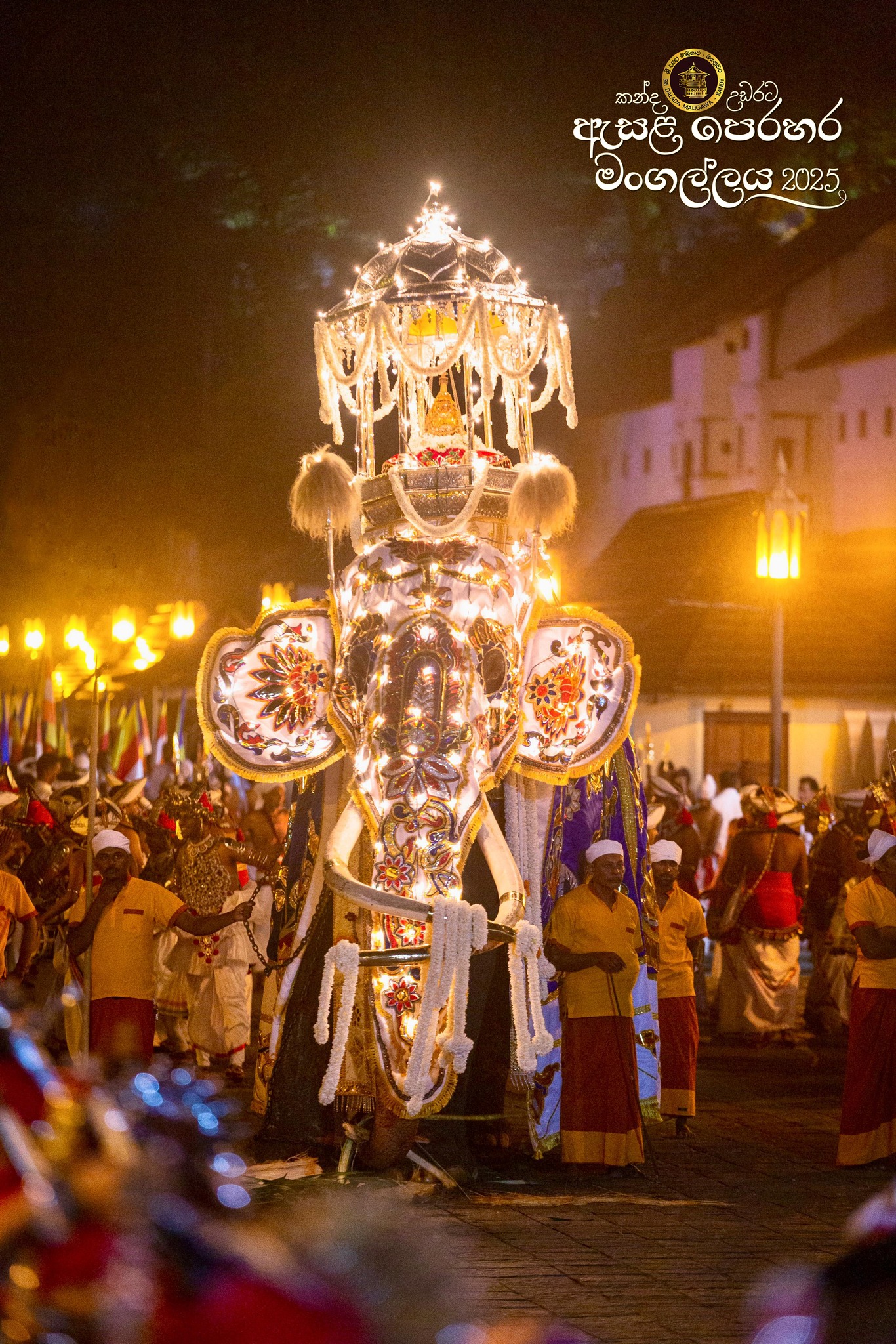
Every August, the ancient city of Kandy transforms. For ten consecutive nights, it becomes something older — a living act of devotion that has repeated itself for over fifteen centuries.
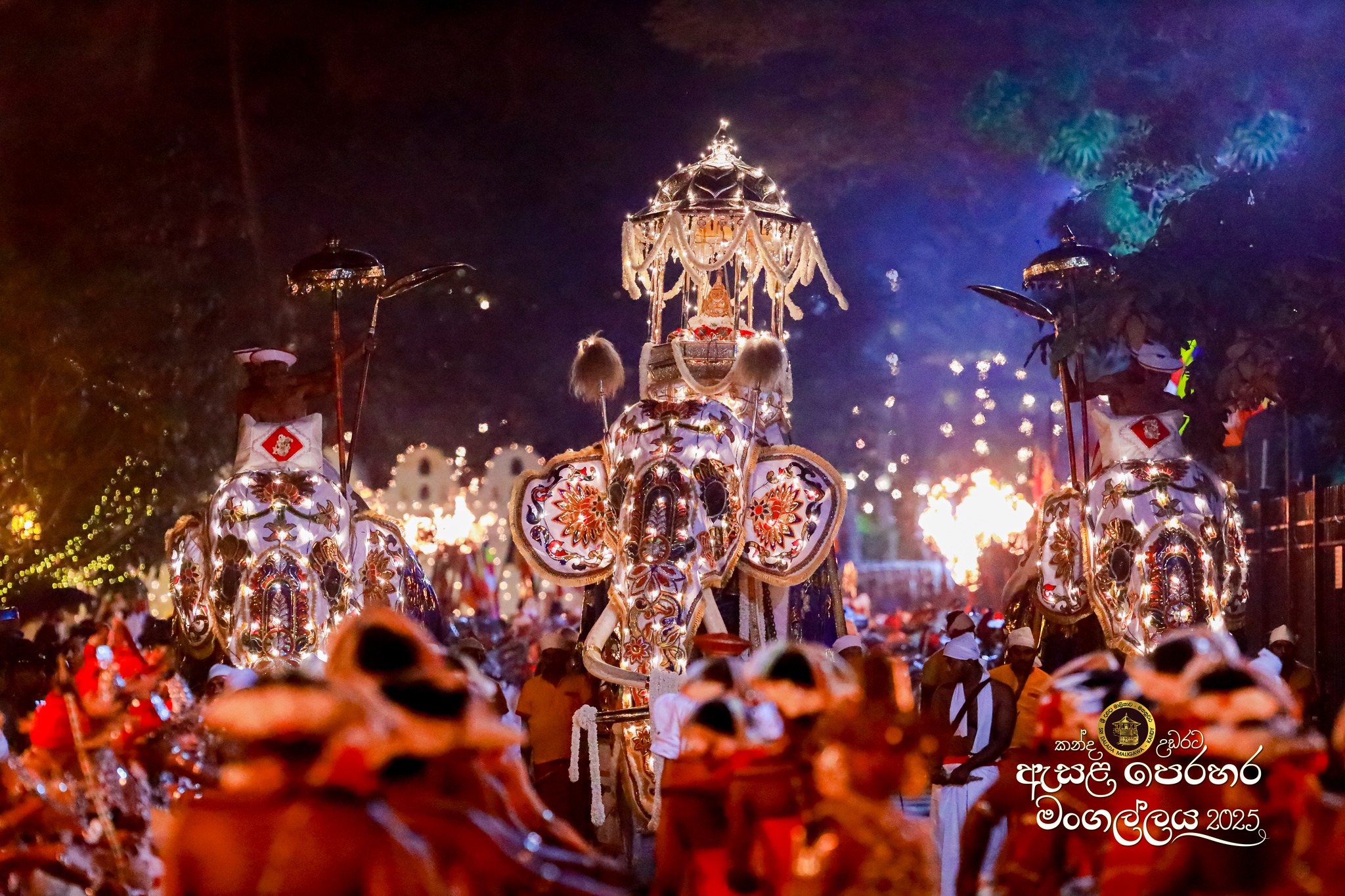
The Esala Perahera — the annual festival of the Temple of the Sacred Tooth Relic — is the culmination of 1,500 years of tradition. It begins with whip-crackers splitting the air with leather snaps, announcing the procession's arrival. Then come the torch-bearers, carrying massive oil torches that bathe Kandy's streets in amber light no electric bulb can replicate.
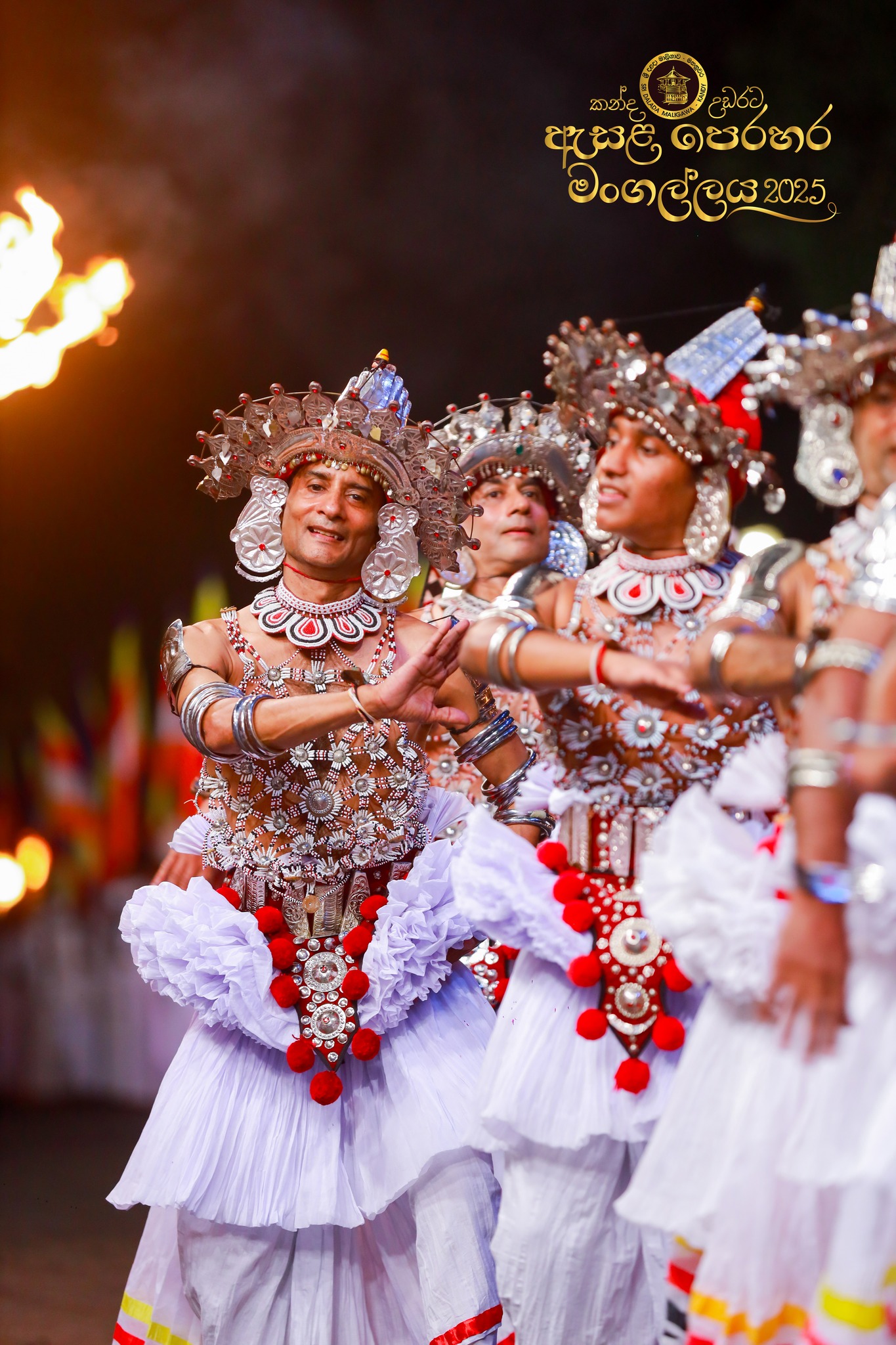
The Procession
What moves through Kandy is not a parade — it is a river. Continuous. Overwhelming. Impossible to take in all at once.
Kandyan dancers in elaborate silver-and-white costumes move with precision from centuries-old training. The footwork is violent and exact. The expressions are not performance — they are possession. Behind them, drummers play the Geta Beraya in rhythms passed teacher to student for generations.
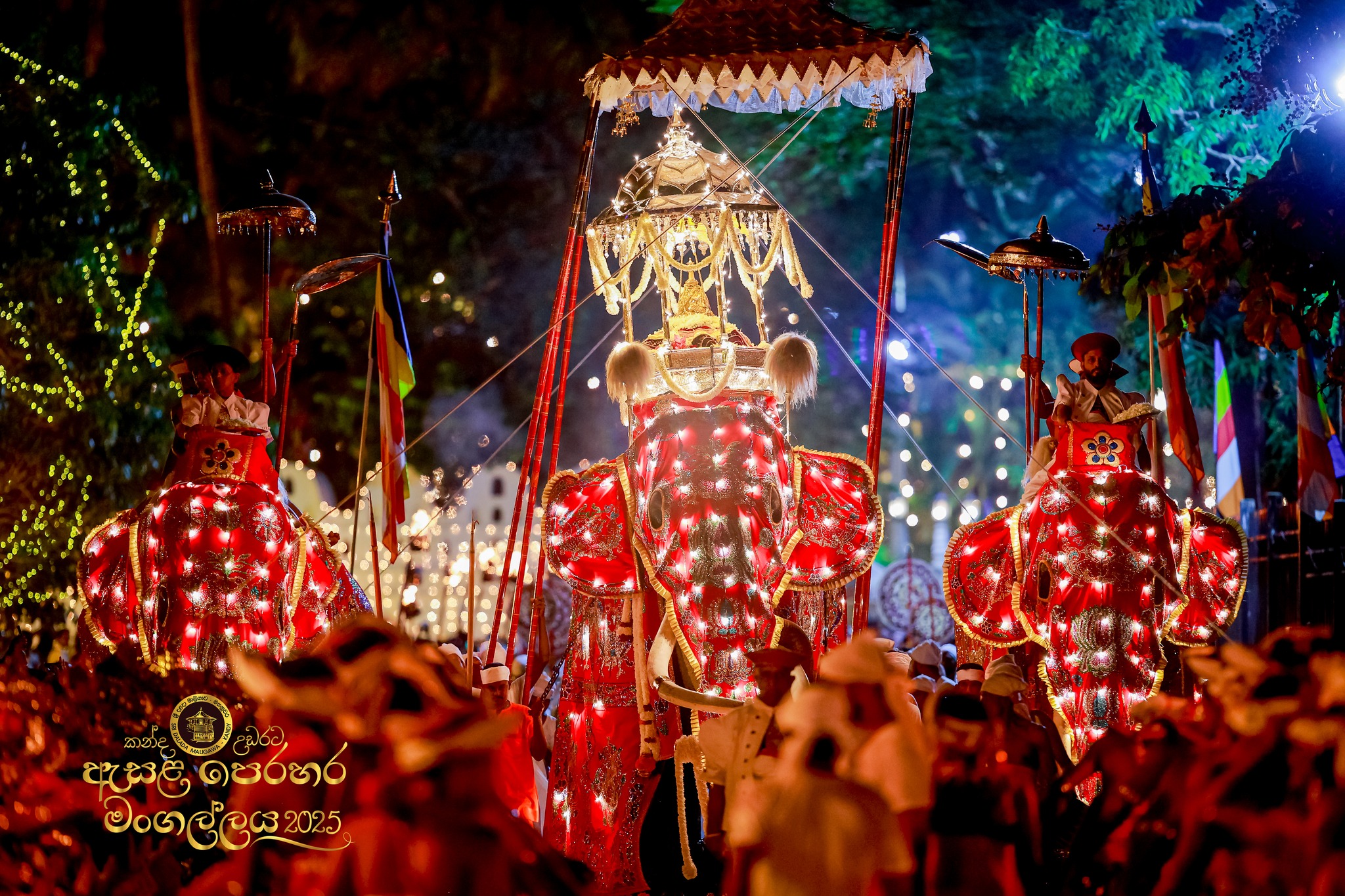
The Elephants
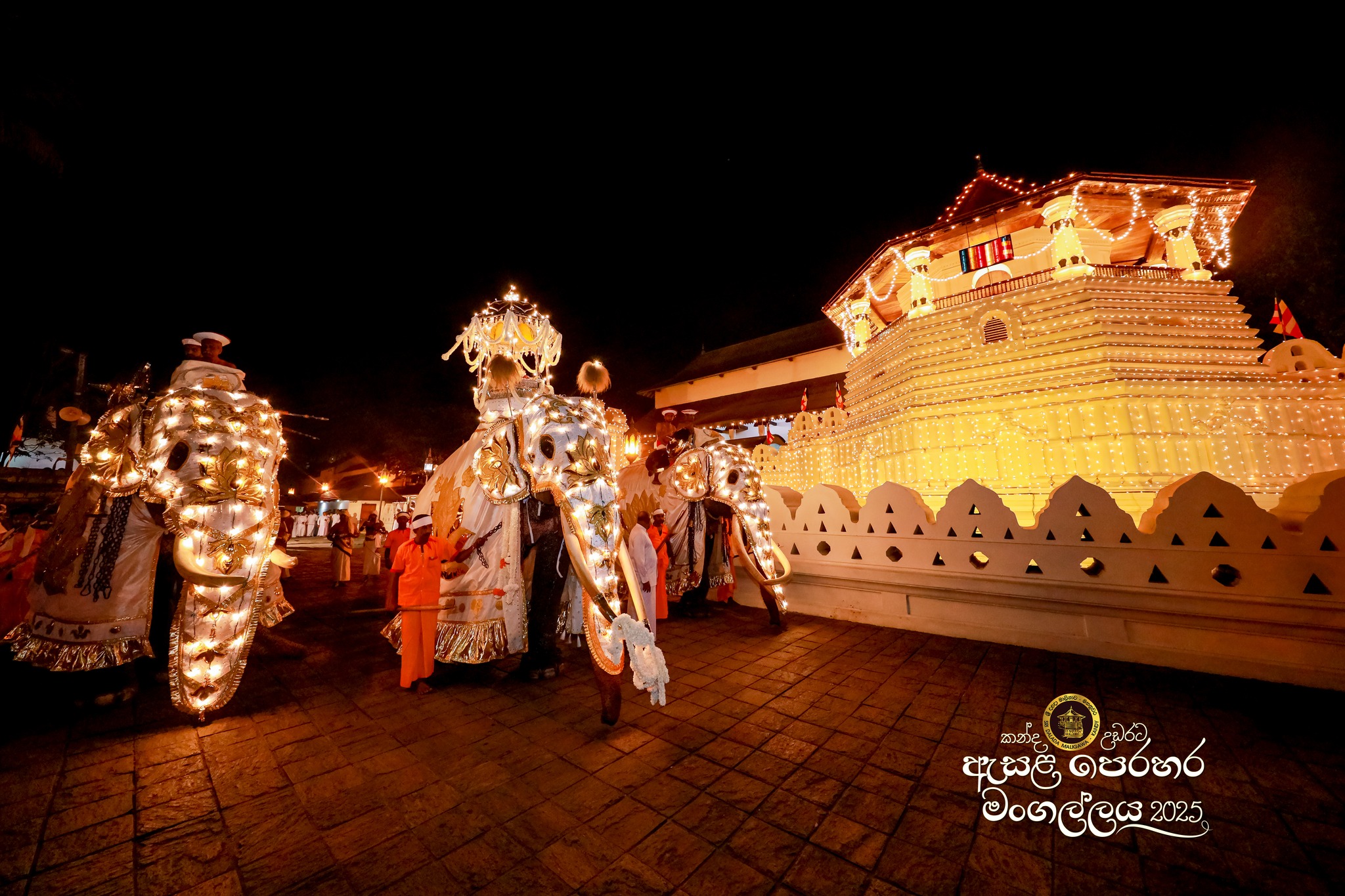
Over a hundred elephants walk in the Perahera, each decorated in hand-embroidered costumes. The Maligawa Tusker carries the golden casket — on his back sits the receptacle holding the Buddha's tooth relic.
Foreign visitors almost always say the same thing: they expected spectacle and received something they cannot name. The scale is beyond what eyes can organize. The devotion — the unperforming sincerity of everyone around you — is beyond anything most tourists have encountered.
A Living Tradition
The Perahera's origins stretch to the 3rd century BC, when Buddhism arrived in Sri Lanka. The tooth relic — smuggled from India hidden in a princess's hair — has been the symbol of sovereignty for two millennia. The king who held the Tooth held the right to rule.
Empires rose and fell. The Portuguese tried to destroy the relic in 1560. The Dutch came. The British came. The festival continued through all of it, every single year, without exception.
That continuity is the message. The Perahera does not celebrate a historical event — it is the event itself.