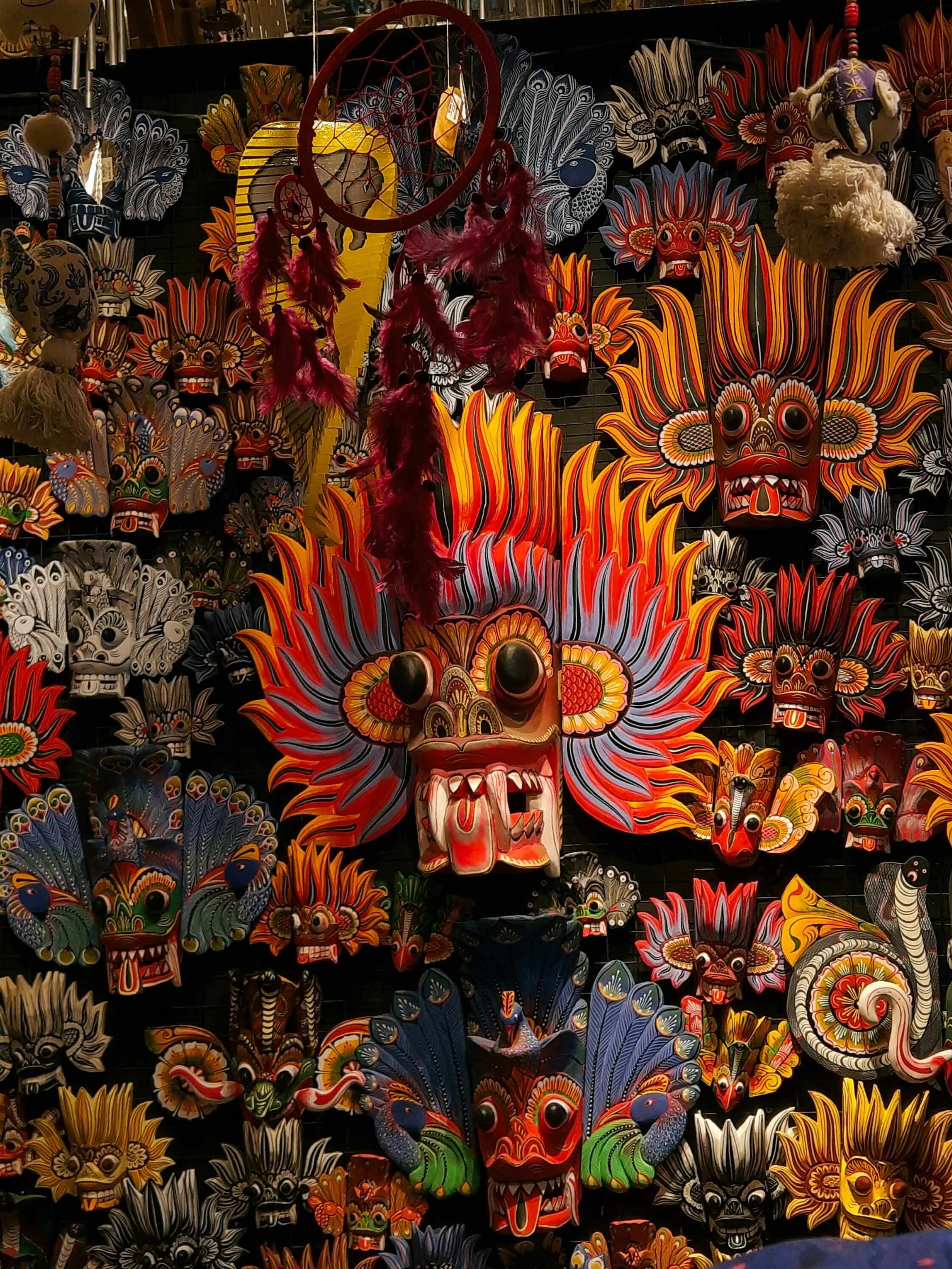
On the southern coast, in a town most tourists pass through without stopping, a small number of families are keeping alive a craft that is simultaneously an art form, a medical system, a theatrical tradition, and a spiritual practice. There are fewer than a dozen master carvers left. When the last of them stops carving, something genuinely irreplaceable will be gone.
The Mask Is Looking at You
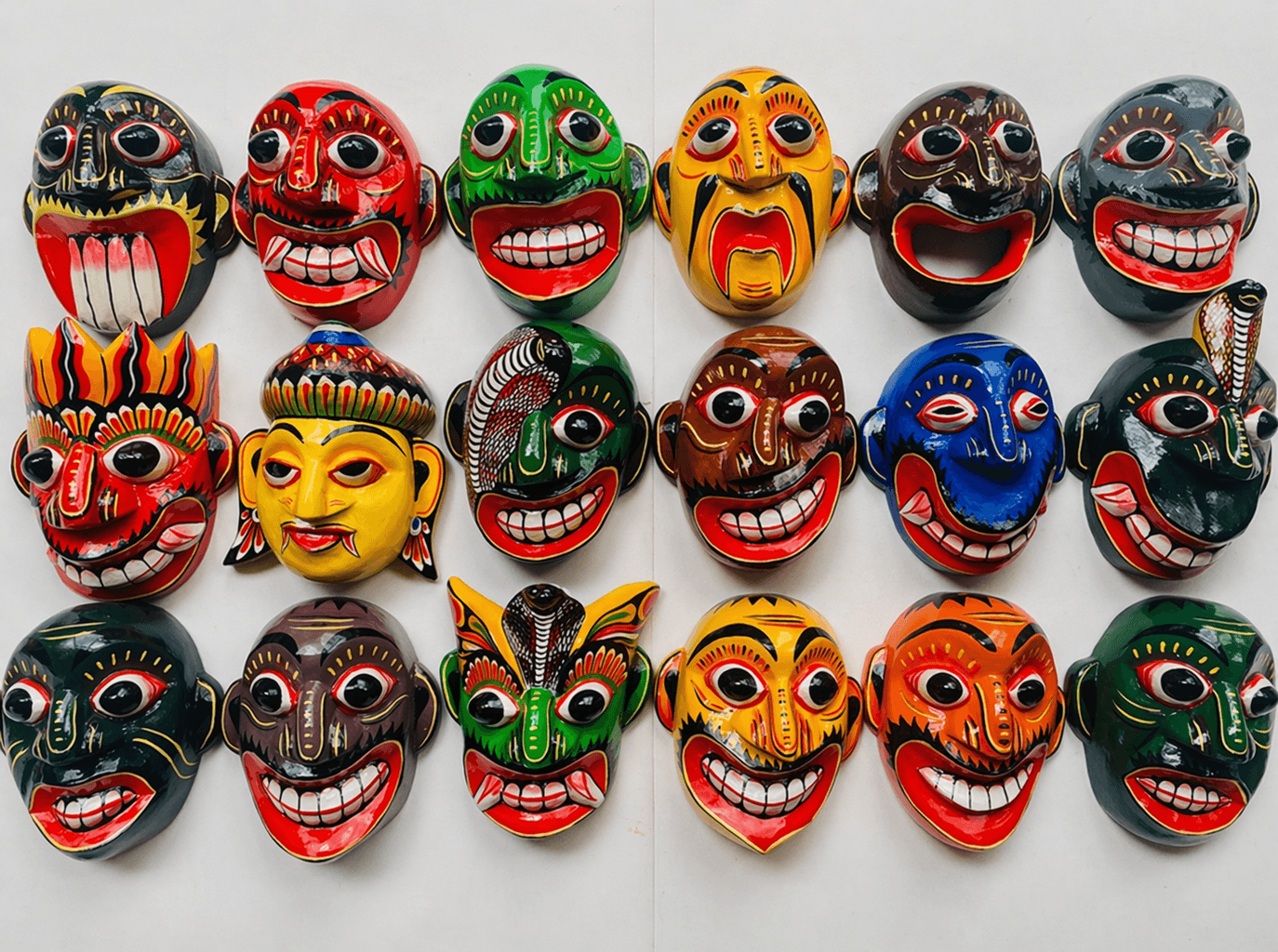
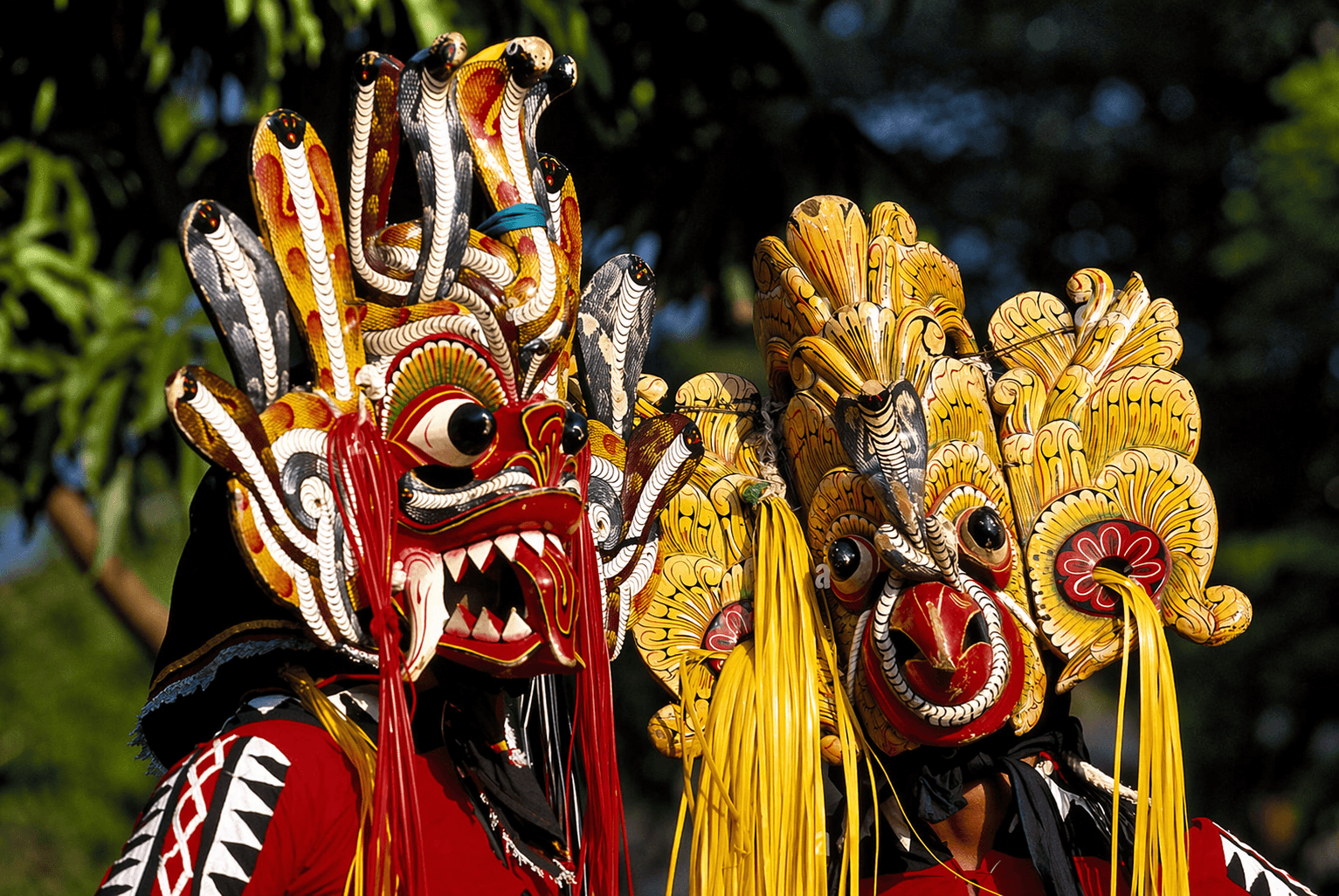
The eyes of a Sanni mask are wide and slightly asymmetrical. The expression is somewhere between a grimace and a grin. The colors are violent — red, yellow, black, white — applied in patterns that have not changed in centuries.
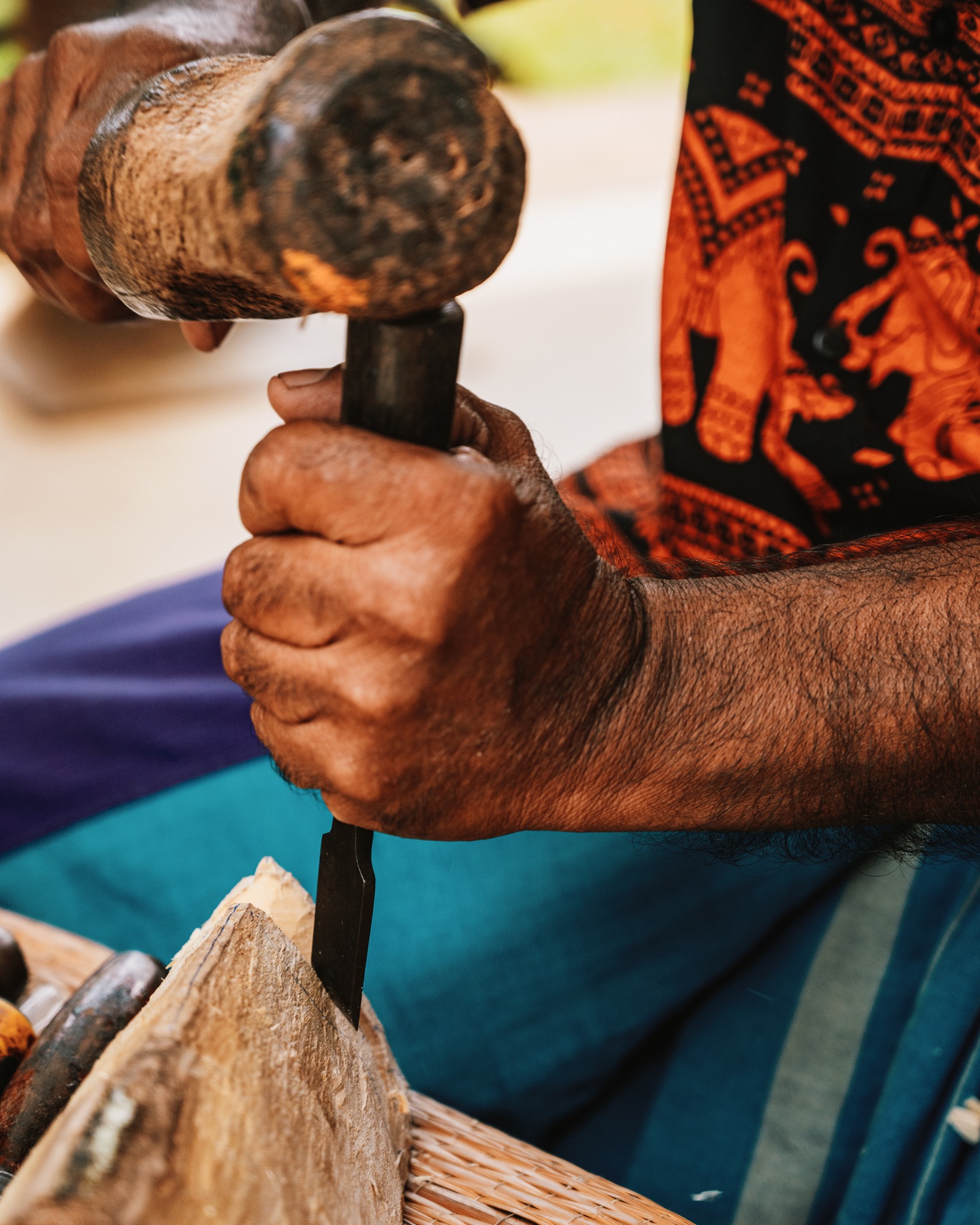
Pick it up. It is lighter than it looks. The wood is kaduru — chosen for its lightness and grain, which accepts the carving knife with a responsiveness that carvers describe as cooperative.
What the Masks Are For
The masks of Ambalangoda were not made to hang on walls. They were made to be worn in ceremony, to embody specific supernatural entities, and through that embodiment to heal.
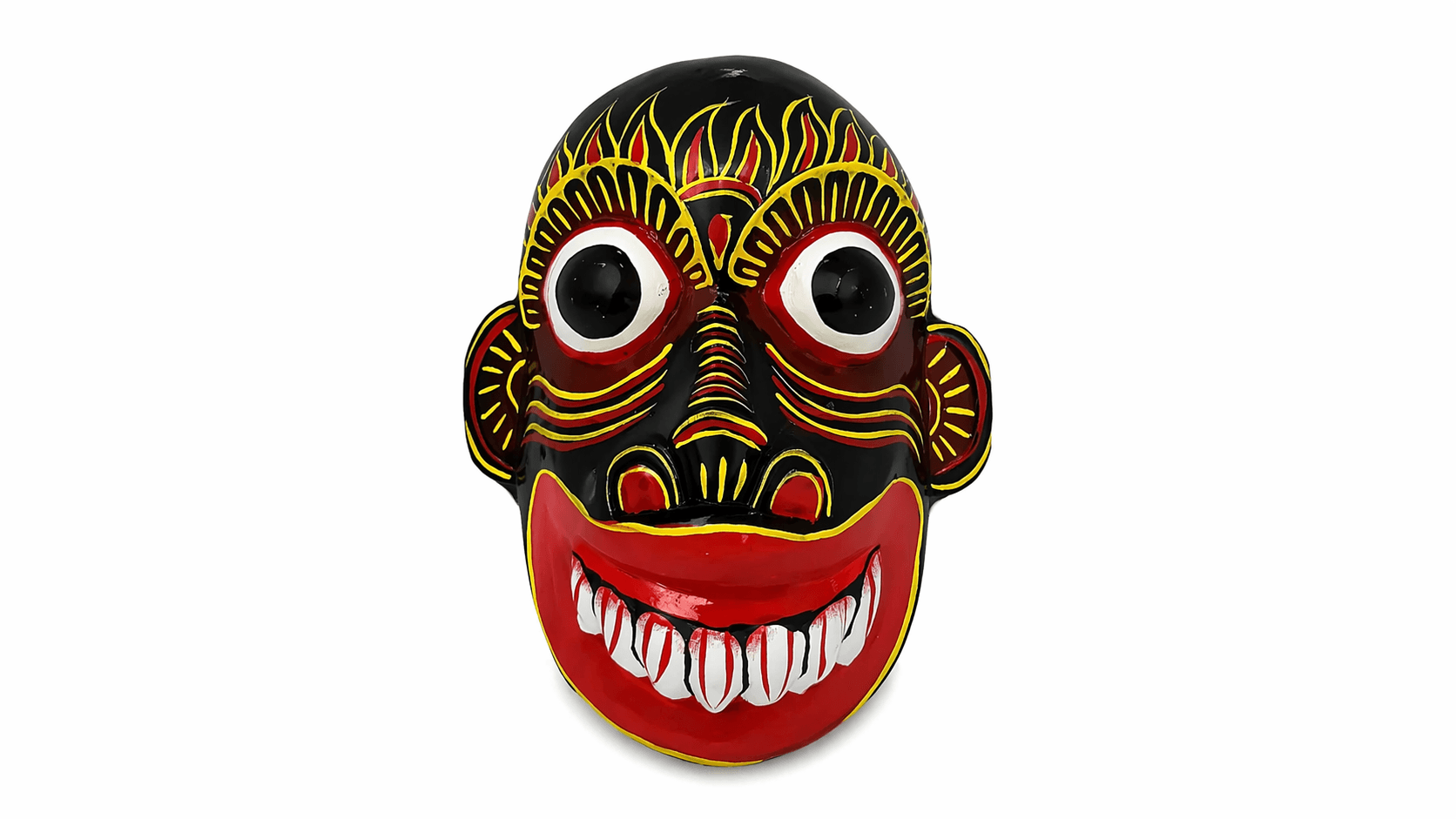
Kolam is a dance-drama form that uses masks to tell stories — originally performed at royal courts, later becoming community festivals. Sanni Yakuma is a healing ritual: the 18 Sanni demons, each representing a category of illness, are summoned by a masked dancer, given form and voice, confronted, and sent away.
The 53 Characters
The full traditional repertoire covers 53 distinct characters — 18 Sanni demons, Kolam characters, and subsidiary figures. Each has a fixed appearance that cannot be altered without changing its ritual identity.
The carvers are not artists expressing personal vision. They are craftsmen executing, with maximum skill, a received form. The creativity is in the execution, in the quality of the carving within fixed parameters, not in departing from them.
What Is Being Lost
The ritual context has contracted significantly. Sanni Yakuma ceremonies are still performed but less frequently. The master carvers who maintain the full traditional repertoire are elderly. Their students are fewer.
What is at risk is the knowledge: understanding of why each character looks the way it does, what ritual function it serves. That knowledge lives in specific people. When those people are gone, the record will be incomplete.