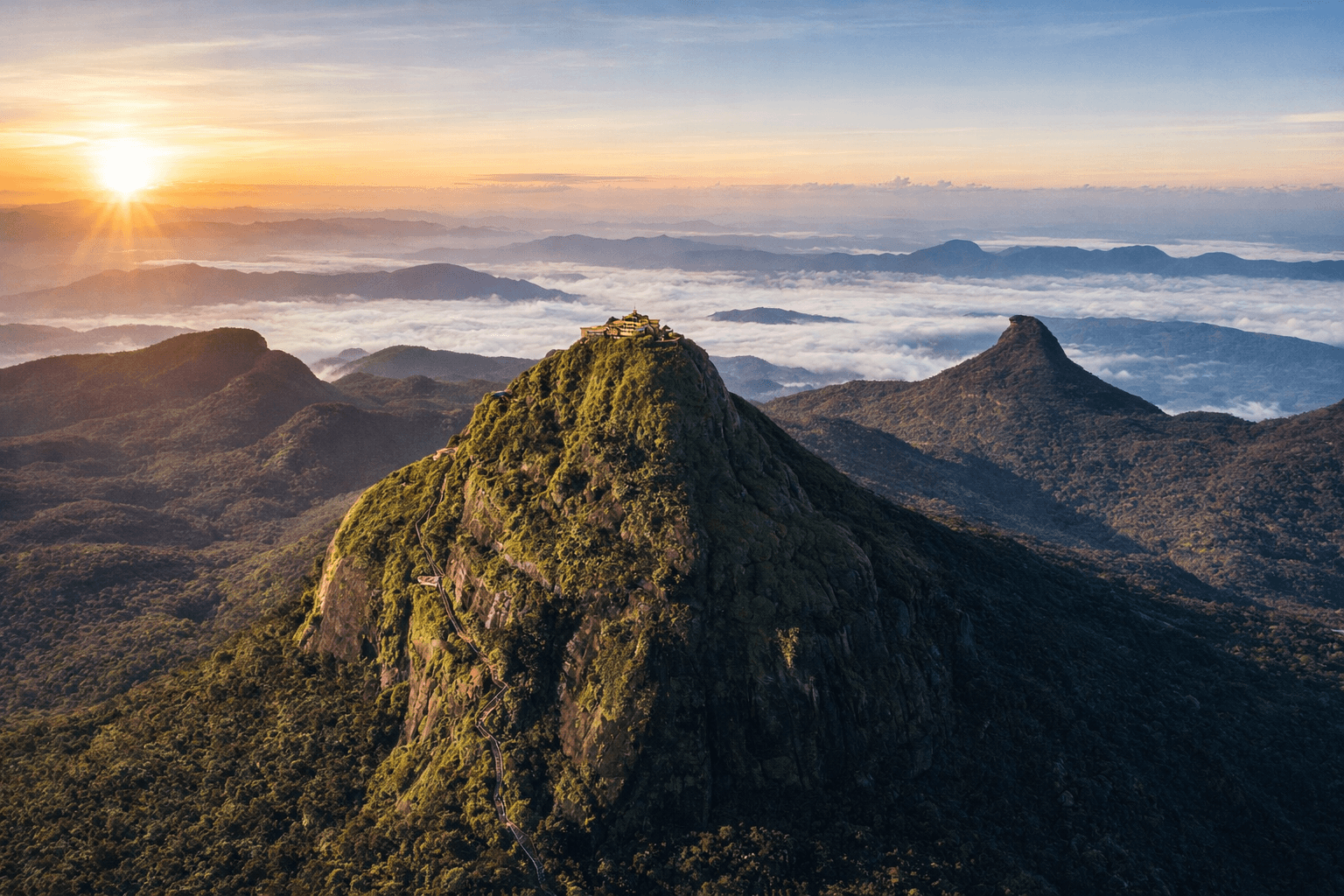
At 2,243 metres above sea level, there is a footprint in the rock. Buddhists, Hindus, Christians, and Muslims have been climbing to see it for over a thousand years. Each believes something different about whose foot made it. None has stopped climbing.
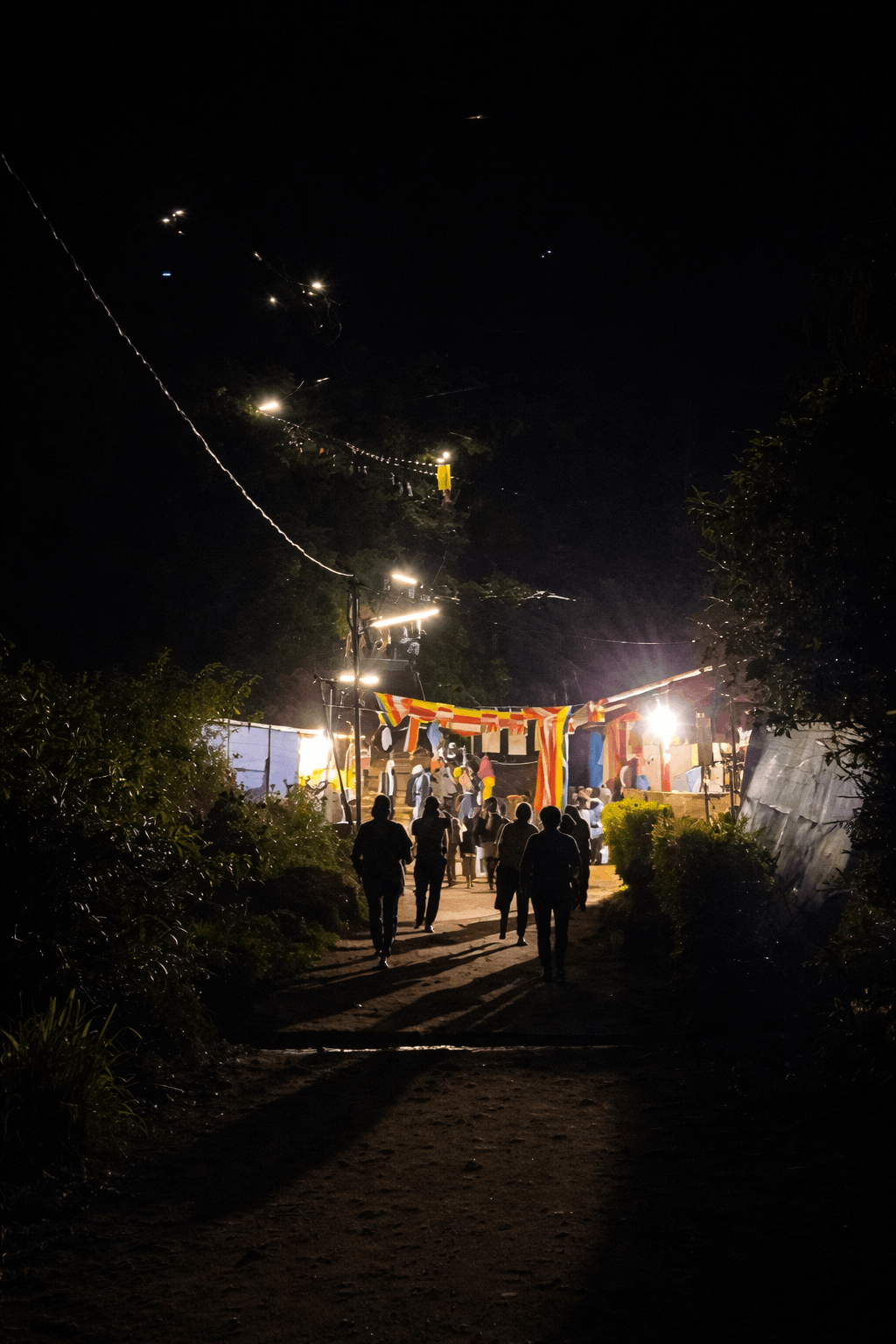
Every pilgrim starts climbing at midnight or two in the morning. The steps are steep and uneven. The air gets cold. And then the sun rises, and you understand why people have been doing this for a thousand years.
Four Names, One Summit
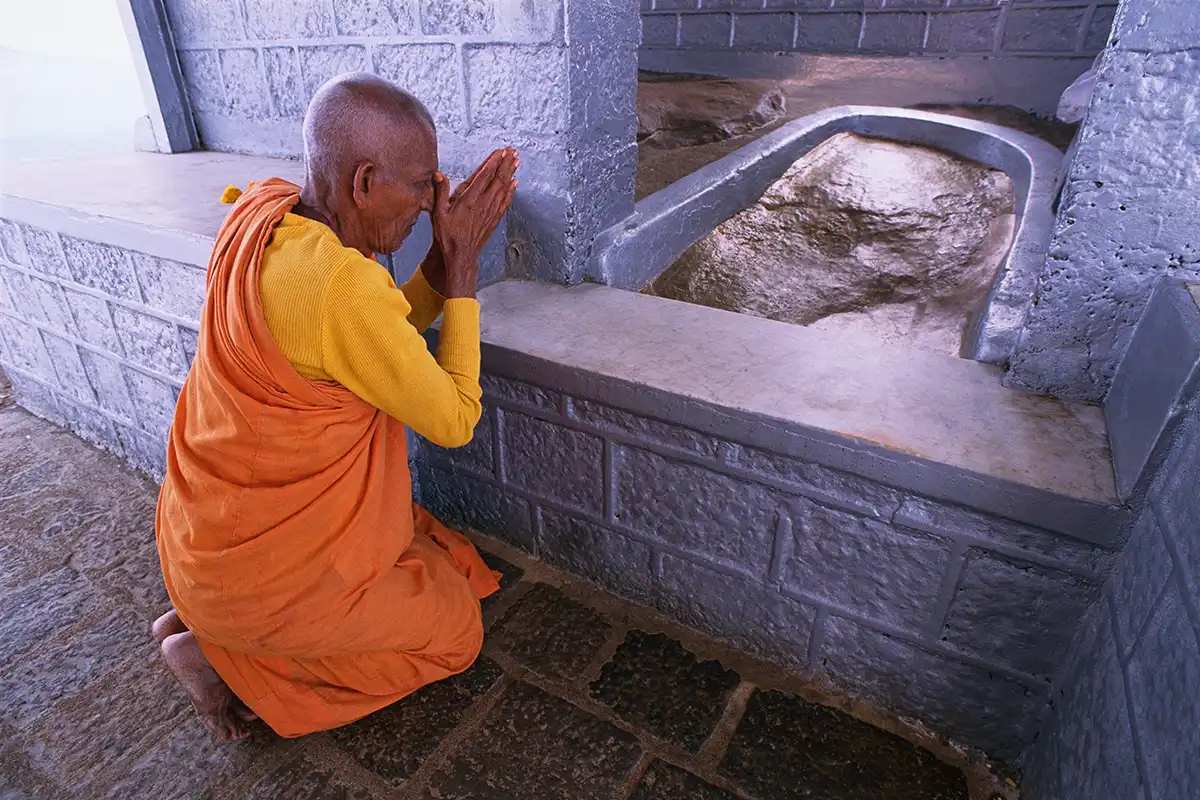
Buddhists call it Sri Pada — the Sacred Footprint — believing it is the Buddha's left footprint from one of his three legendary visits to the island.
Hindus call it Sivan Adi Padham — the foot of Shiva — believing the print was made by the god himself as he danced creation into existence.
Christians and Muslims call it Adam's Peak, believing this was where Adam first set foot on earth after being cast from paradise.
The Climb
The ascent from Dalhousie is roughly five kilometres of steps. It takes two to four hours depending on pace. During peak season, thousands of pilgrims move upward together — a river of torchlight in the cold air.
The atmosphere is unlike any mountain climb. This is not sport. The majority around you are pilgrims — families with children, elderly who have made this climb dozens of times, monks in saffron robes.
You are a guest in someone else's act of faith. Most foreign visitors find this not alienating but grounding.
The Summit
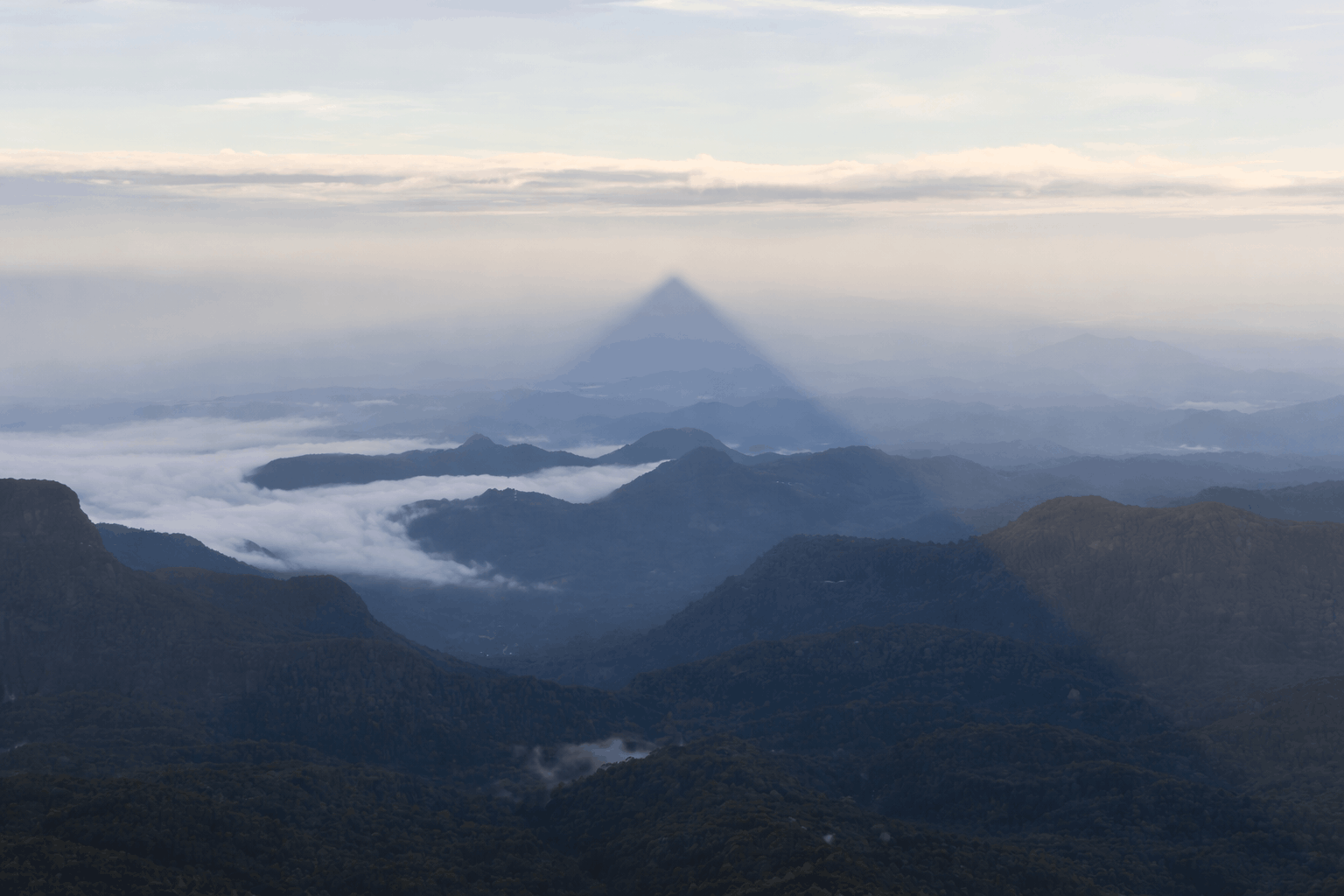
At the summit, the shadow of the peak is projected westward across the clouds below — a perfect triangular silhouette that shrinks as the sun climbs. Pilgrims watch in complete silence.
Some places are simply sacred. Sri Pada is one of them.
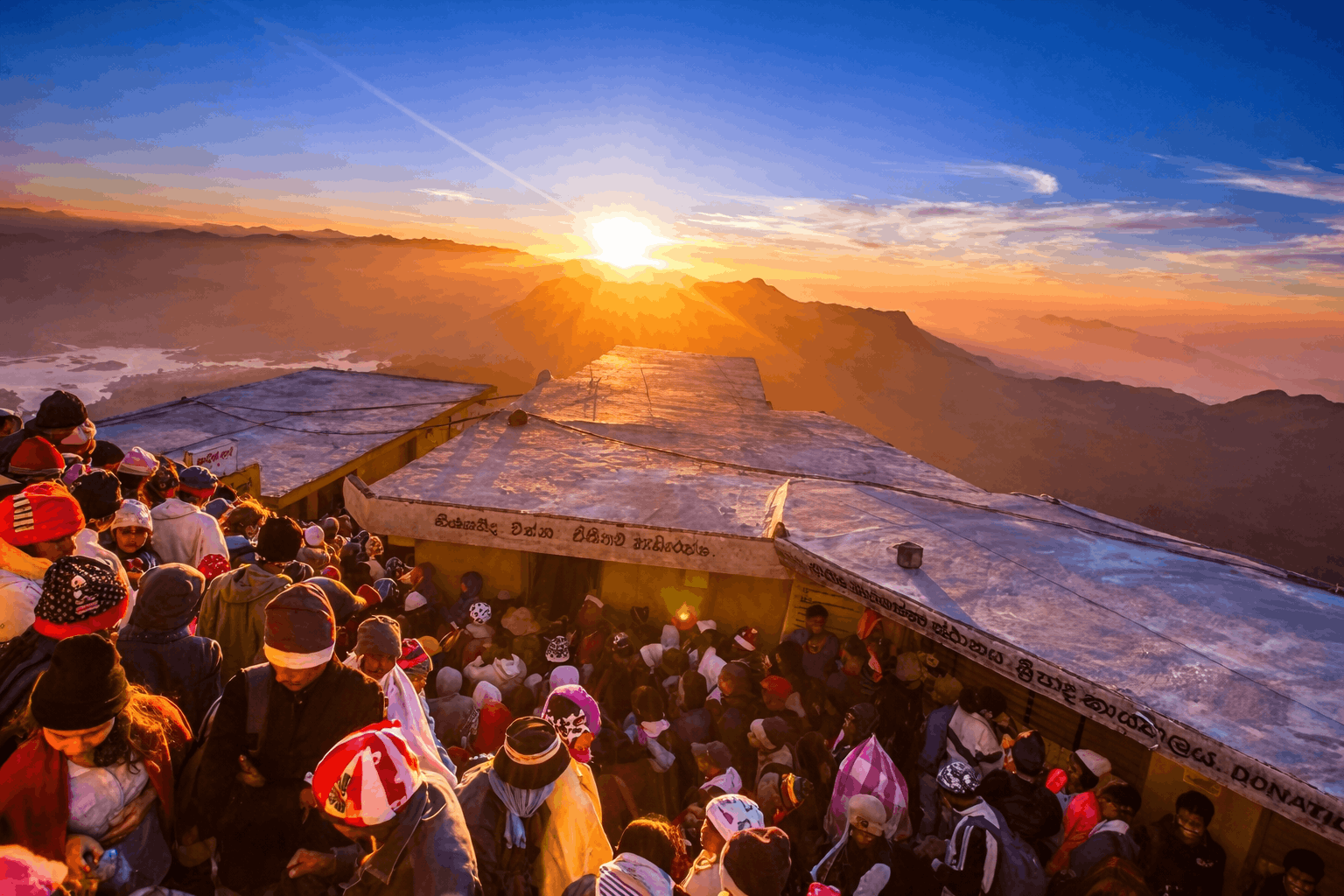
There is a moment, just before dawn, when everyone on that small platform — Buddhist, Hindu, Christian, Muslim, traveller — is looking in the same direction, waiting for the same light.