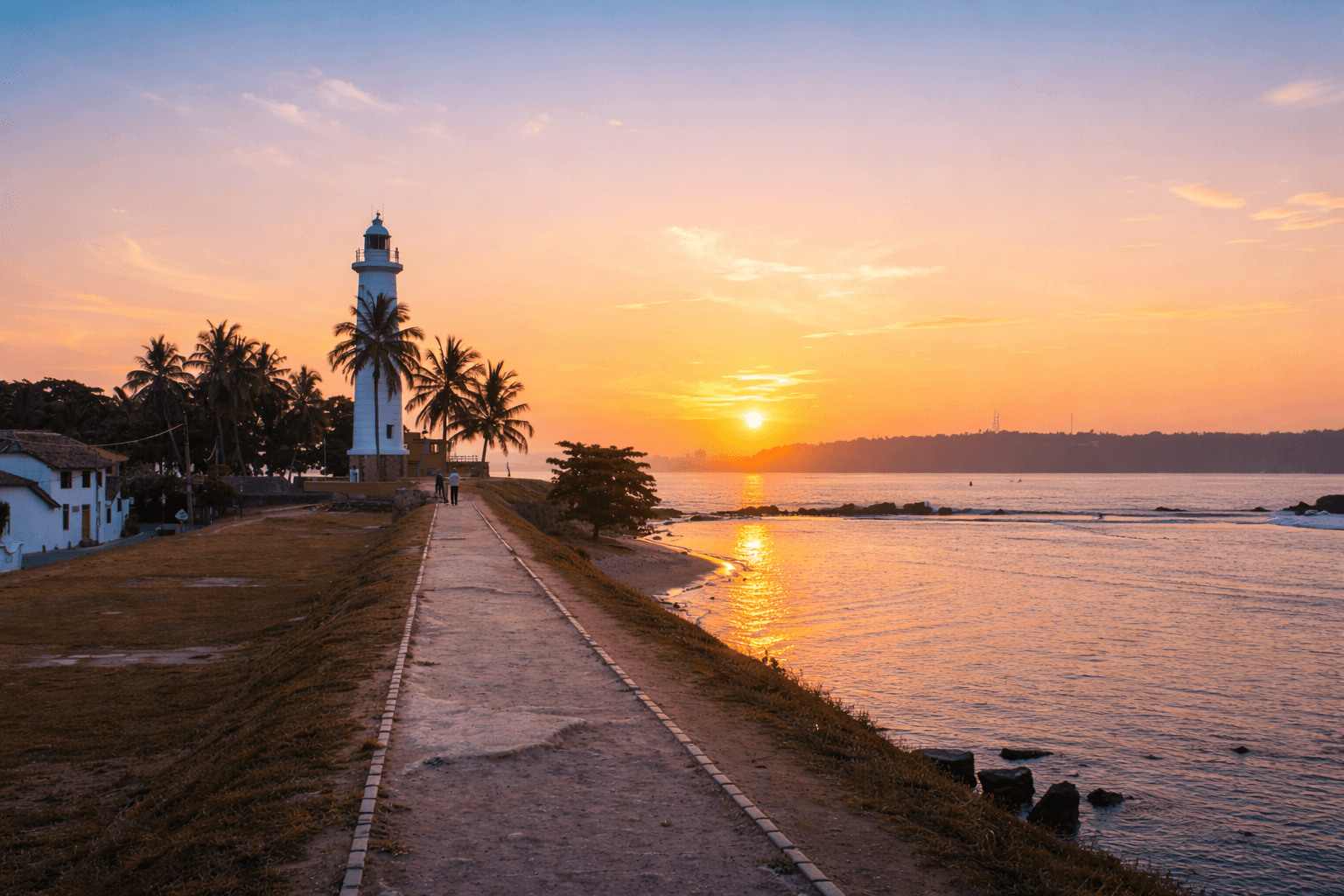
Between 1505 and 1948, three separate European empires arrived on this small island. The Portuguese came for spices. The Dutch came for trade. The British came for everything. Each stayed long enough to leave something permanent.
Stand in Galle
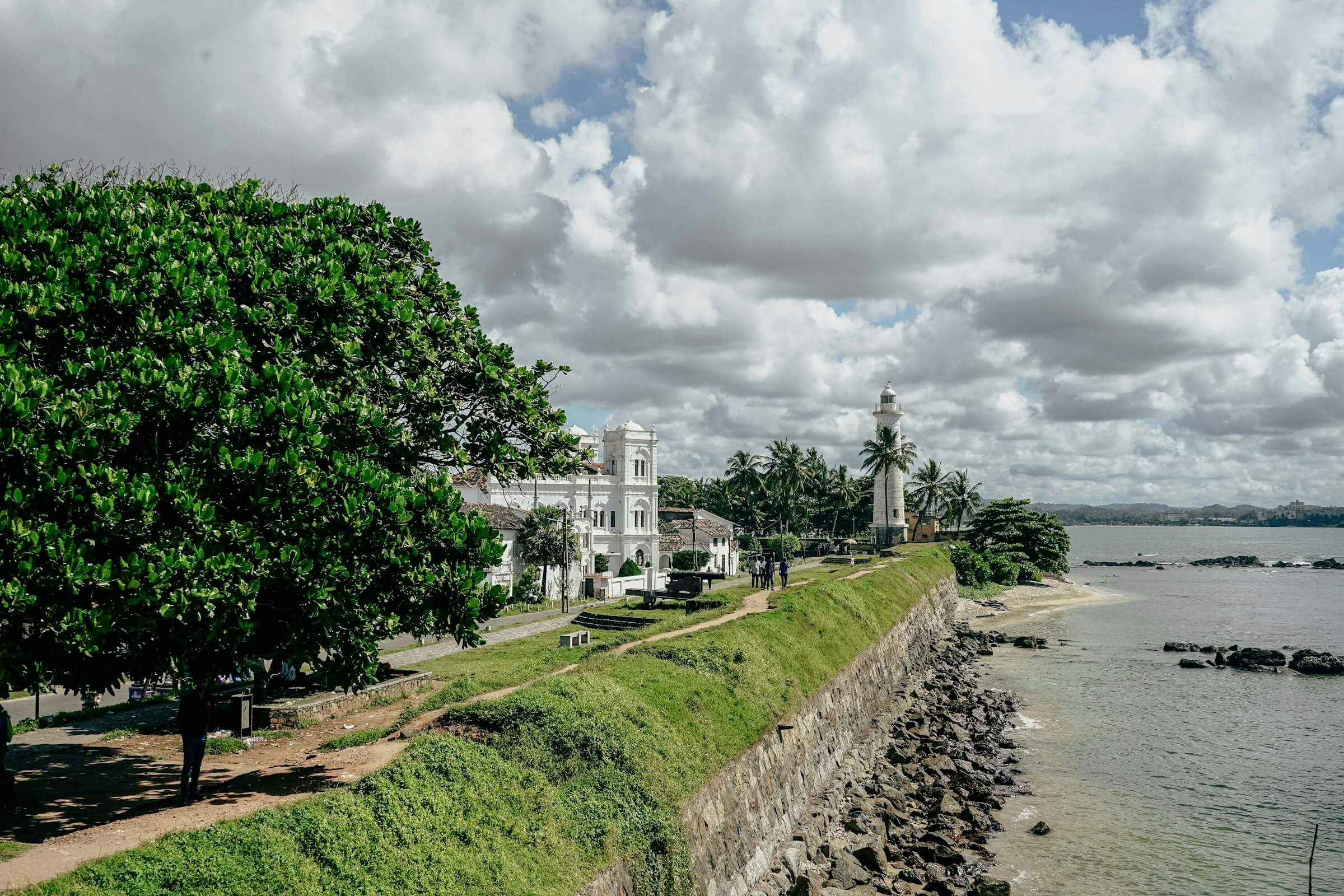
Stand in Galle Fort and you can see all three at once. The walls were built by the Portuguese in 1588 and rebuilt by the Dutch in 1663. The lighthouse was built by the British in 1848. The church across the street was built by the Dutch Reformed Church, converted to Anglican use by the British.
This is what 443 years of consecutive colonial occupation looks like. Not erasure. Accumulation.
The Portuguese: Faith and Fortification
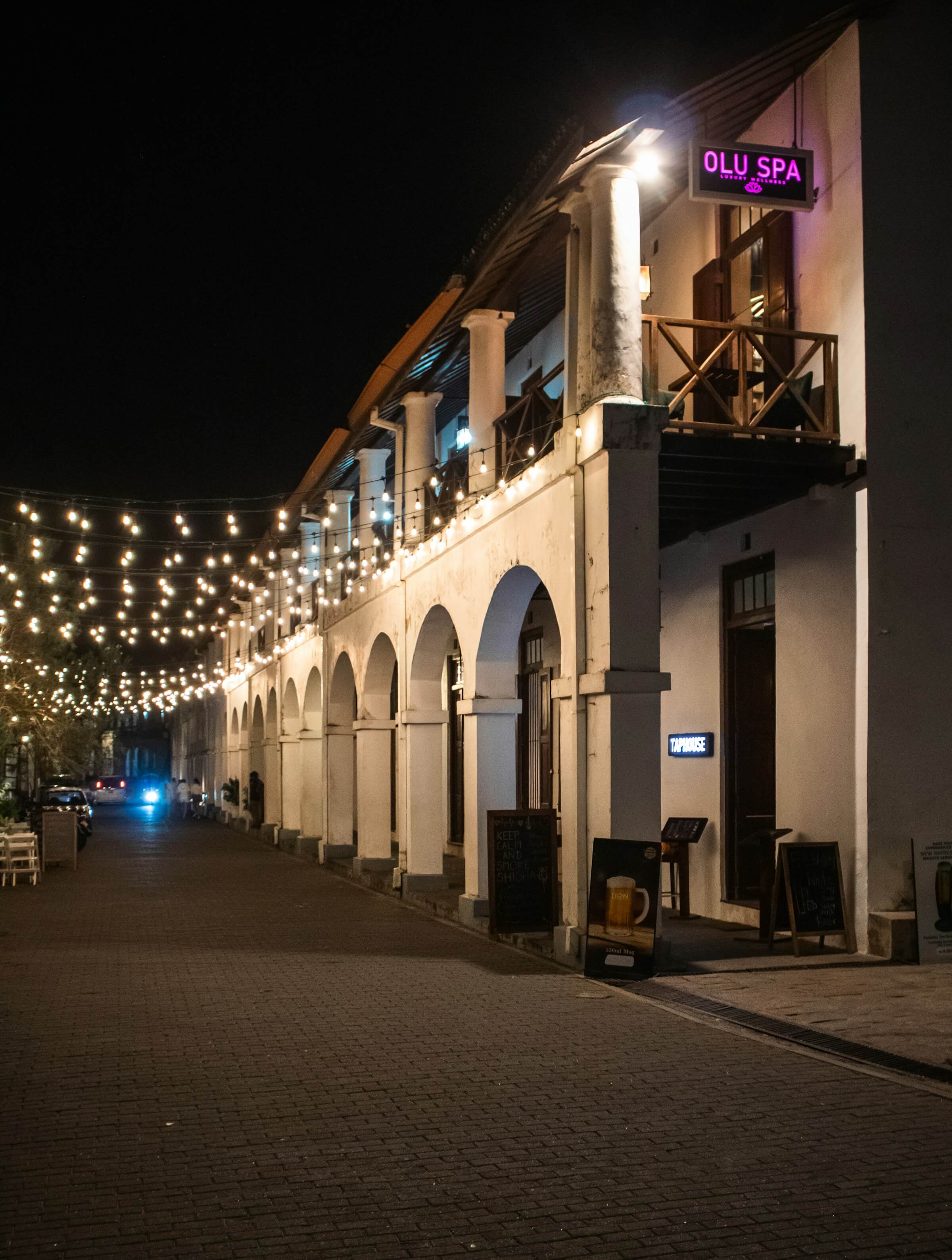
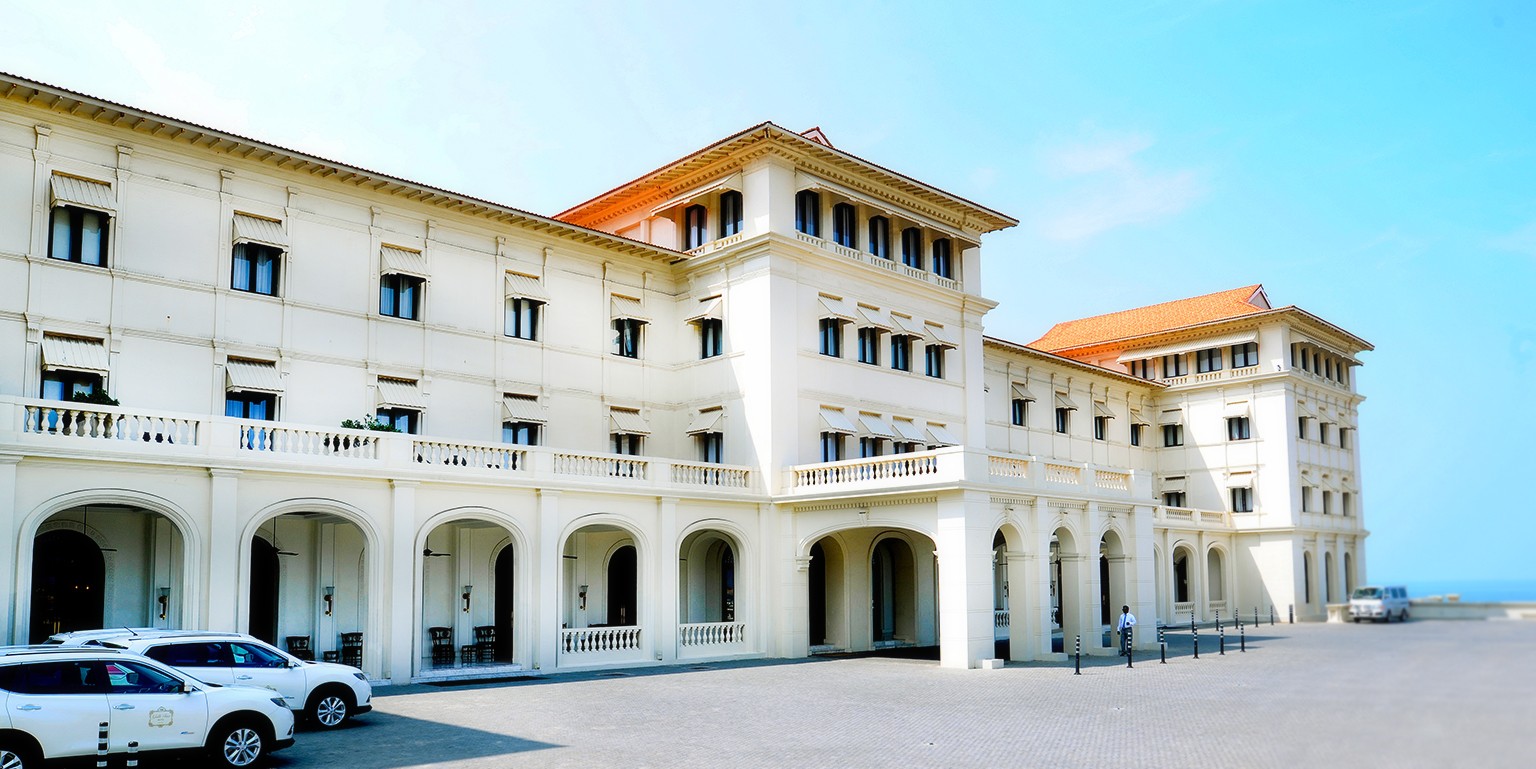
The first Portuguese ships arrived in 1505. They built forts along the western and southern coasts. They built churches wherever they built forts. They brought Franciscan missionaries who converted tens of thousands to Catholicism.
They failed to conquer the interior. The Kandyan Kingdom resisted every Portuguese incursion for over a century. What the Portuguese left behind is still visible. The Sri Lankan Catholic community — concentrated around Negombo — traces its faith directly to Portuguese missionaries. Family names like Fernando, Perera, Silva, and De Silva are among the most common in Sri Lanka today.
The Dutch: Commerce and Canal
The Dutch arrived in 1658 as partners the Kandyan king invited to help expel the Portuguese. They succeeded militarily but then declined to honor the terms — instead occupying the coastal territories themselves.
They rebuilt the Portuguese forts more substantially — Galle Fort as it stands today is overwhelmingly Dutch. They built canals along the western coast that are still navigable today. They established Roman-Dutch law that forms part of Sri Lanka's legal framework to this day.
The British: Railways and Reinvention
The British acquired Ceylon in 1796. What began as a strategic acquisition became the most transformative period in the island's modern history.
They conquered the Kandyan Kingdom in 1815 — something the Portuguese and Dutch never managed. They built railways, cleared highlands for tea, transformed Colombo into a colonial administrative city.
They brought English, railways, tea, cricket, and parliamentary democracy. All of it remained after they left. Cricket is now the national passion. Tea is the national identity.
What Three Occupations Left Behind
The remarkable thing about Sri Lanka's colonial history is not that three powers occupied it. What is unusual is the degree to which each layer added to rather than replacing what came before.
Each colonizer came to take. Each left something that became, across generations, genuinely Sri Lankan.